


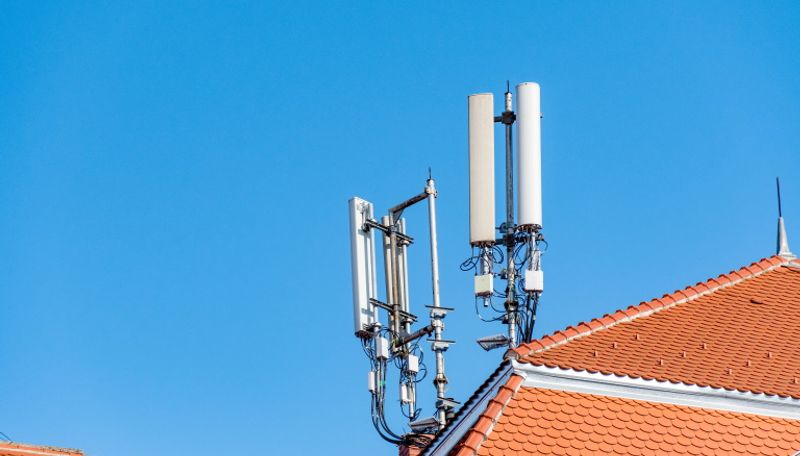
Harbinger Capital Markets plans to build an open access LTE network in the US. It will use spectrum acquired via the just-approved takeover of SkyTerra Communications (23 MHz), a satellite telephony provider. Via its other subsidiary TerreStar, it will have another 30 MHz by 2013. The company plans tests in Denver and Phoenix, ahead of a commercial launch in Q3 2011. At launch, the company expects to cover around 9 million people. This should increase to 100 million by the end of 2012, 145 million by end-2013 and 260 million at the end of 2015.
Harbinger brings a well-funded newcomer to the American market. There are similarities to Orange in the 2G period and Hutchison 3G in the 3G era, both launched by Hutchison Whampoa. Harbinger, a hedge fund run by millionaire Philip Falcone, is also betting on a new technology to enter the market. LTE Advanced is likely to emerge as the formal 4G technology standard.
Harbinger is also on top of the industry trends by proposing an open access network. In that sense, it's similar to Clearwire, which operates as a wholesale provider for its shareholders Sprint and several cable operators. The launch of an open access network will attract the interest of Deutsche Telekom in particular. In its recent strategy update, the German operator said it targets marketing-leading positions for all its subsidiairies. T-Mobile USA is not there yet, but in the meantime is trying to improve its position with the roll-out of HSPA. A cooperation deal between T-Mobile USA and Harbinger seems an abovious solution for LTE development. Cooperation between T-Mobile USA and Clearwire has been the subject of speculation for some time and increasingly so since Clearwire has started to favour LTE as the natural successor of Wimax. Harbinger offers a second potential partner for T-Mobile. A partnership between Clearwire and Harbinger is also possible, since Harbinger recently acquired a stake in Sprint, which controls 51 percent of Clearwire.
Open networks are nothing new in the world of fixed telecoms, but more as a result of regulatory intervention. DSL networks are unbundled, while several examples of open fibre networks have emerged with little or no government intervention, such as Reggefiber and smaller cable operators in the Netherlands, the planned Australian NBN and the Google Fiber project. With the arrival of 4G, the mobile world can also embrace open networks. Not as a result of regulatory policies, but out of financial motivations driven by a network that requires a lot more base stations and more extensive backhaul than 3G.
The auction of 2.6GHz radio frequencies will start in the Netherlands on 6 April. Don't be surprised if at least one of the nine bidders is backing strongly an open access model.


