


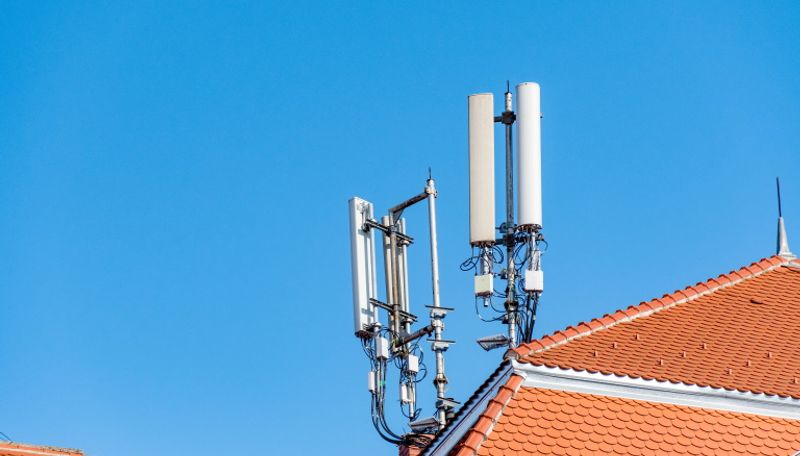
Sigfox announced that its wireless IoT network has reached coverage of over 1 billion people worldwide, in 53 countries. At its Sigfox Connect event with partners, the company also announced a range of new products, including a micro base station and new geolocation and asset tracking services.
Started in 2013, the low-power network using unlicensed spectrum has spread quickly through partnerships with local providers. The most recent countries to join the network include Austria, Lichtenstein, Romania, Norway, Kenya, Peru, Guatemala and Honduras. In total, the network reaches 90 percent of the world’s GDP, in five continents.
The company announced at the event the Sigfox Access Station Micro, a low-cost outdoor gateway to make it easy to connect to the wireless network. With a compact form factor, integrated antenna, and Power-over-Ethernet capabilities, the base station can be installed within minutes and connect to Sigfox’s Cloud via existing internet access or cellular networks, the company said.
The device was developed specifically for IoT application deployment in areas such as deep indoor or outdoor remote customer locations. A single gateway can cover large rural areas of hundreds of square kilometers, while the extremely low energy consumption enables remote IoT applications where no power source is available with a small solar panel and low-bandwidth satellite backhaul.
For customers deploying bigger IoT applications, Sigfox introduced the geolocation service Atlas WiFi, developed with location specialist Here. Designed to support global supply chain and logistics applications, the service helps track and locate IoT devices and assets indoors and outdoors and use the data collected to manage operations. Atlas WiFi combines data from the Sigfox network and Wi-Fi infrastructure to provide a single location service in all types of geographic environment, without GPS.
To further support asset tracking, Sigfox introduced Bubbles, a type of radio tag. These are small devices that can be placed anywhere to act as a a transmitter for radio signals. When a Sigfox device enters the range of a Bubble, it sends the Bubble’s ID to the Sigfox Cloud along with its own identification. As they cross Bubbles, assets are located with high accuracy.
The company is already testing the concept with travel group Amadeus to explore use cases where IoT technology could solve some of the challenges faced by travellers throughout their journeys. Other applications are expected to include child or pet tracking and use in warehouses to manage inventories.


