


The new Trans Adriatic Express (TAE) low latency fibre route stretching from southern France to Turkey is a major engineering achievement, but it also changes the face of Europe’s digital infrastructure map by bringing multiple new benefits to the region it crosses.
Author: Antonios Kollaras, Network Investment Manager, EXA Infrastructure
TAE brings significant new digital infrastructure capabilities across south-eastern Europe, interconnecting the continent with Asia and being one hop away from the Middle East. It is a major step forward for routing diversity in particular, plotting a very direct course across its main length and avoiding the need to take indirect routes across multiple operator networks in the region, some of which only offer older fibre technology.
Extending for nearly 4,500 kilometres in total, TAE serves as a digital bridge that brings countries and their economies closer together. As the most direct fibre route across south east Europe, it links to the continent and Asia, making it easier for data - and ultimately for information and entertainment - to flow.
This isn't just about faster data transfer and assuring user experience – it's about the ability of digital infrastructure to support improved commercial opportunities, accelerate the development of digital services and enable new ideas to thrive. With TAE now interconnecting this part of Europe, distance becomes less important, and opportunities for growth become more accessible.
This ambitious low-latency fibre route has implications for Europe’s digital map that extend well beyond its technical accomplishments. TAE's impact is most evident in that this network is not merely a connection of end-points, but a catalyst for digital services in the region, and even for future digital infrastructure more broadly.
Modern infrastructure that tackles geographic challenges
There are three primary benefits of TAE to customers: modern digital infrastructure, new and diverse routes through the region, and the security it offers. It is about far more than just connecting dots on a map, and stands as an example of cutting-edge infrastructure that overcomes challenges previously thought too difficult or costly to tackle.
Geographical obstacles have historically loomed large in south-eastern Europe and the Balkan peninsula with a prominent mountain range stretching from the Dinaric Alps down to Crete in Greece, which acts as a natural barrier, and has constrained the movement of goods and people for centuries. In the digital age, it translates to data traffic having had previously circuitous routes, for example by winding east to the Balkans and then south.
TAE charts a direct route right across the region, the shortest one feasible from west to east, on a similar trajectory to the roads of Ancient Rome, in this case drawing parallels with the Via Egnatia that ran through to Constantinople. Just as the ancient route prompted development by creating ‘spurs’ to other link routes along the way, TAE acts as a modern-day facilitator for the whole region. Traffic from these digital spurs merges onto the network's east-west ‘superhighway’.
Accelerating the digital economy
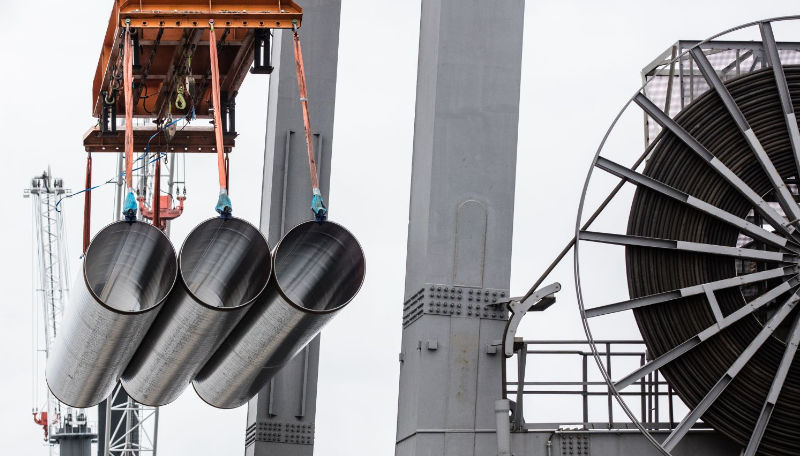
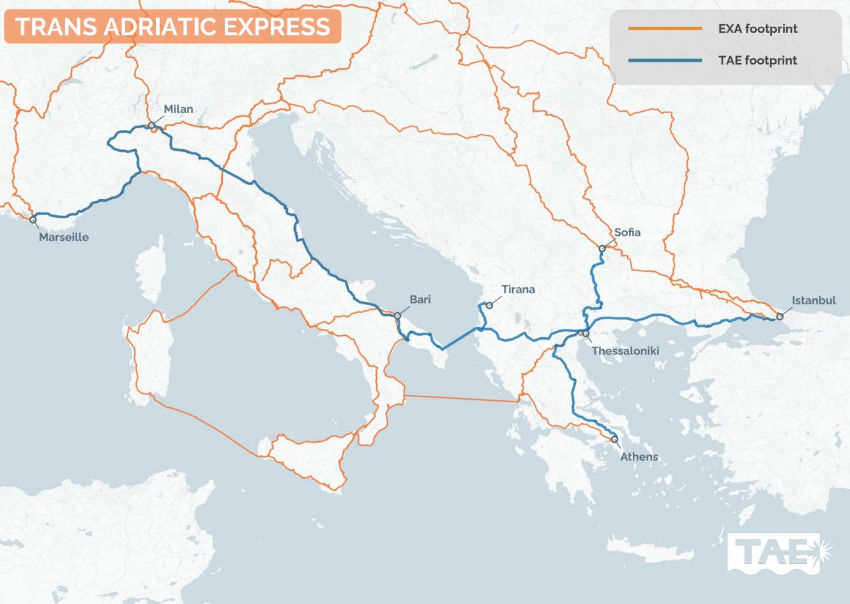
TAE's main route map features EXA-owned full-fibre network links that are both new routes created by EXA to build out the full system, and the long distance backbone itself that runs alongside the Trans Adriatic Pipeline which carries gas from east to west. It also includes several sections, such as the final link to Istanbul in the east, for which EXA has lit a dark fibre connection to ensure every major digital centre is reached, with the intention being to scale capacity over time as demand increases.
EXA had already laid a solid foundation with high-speed, resilient connections in northern Italy and southern France, serving as anchors for TAE's extended reach across the TAP and into south-eastern Europe. New investments have been made in key full-fibre links such as that between Bari and the cable landing station at Melendugno on Italy’s Adriatic coast.
One key region where TAE brings substantial infrastructure upgrades is in connecting Italy with Albania beneath the Adriatic. This development is significant for the future of Albania's digital economy, as other sub-sea cables are running into the country and nearing end-of-life. TAE's arrival marks a stride towards accelerating the development of the country's digital infrastructure, and as such serving as a catalyst for digital economic growth. By facilitating direct, high-capacity connections between western and south-eastern Europe, TAE empowers previously underserved and under-connected regions.
Implications for inter-regional routes
TAE's impact within the region itself - as opposed to carrying traffic through it - is that it interconnects major digital hubs and emerging centres. Among these, Sofia is a clear beneficiary. Already a hub city in this part of Europe, Sofia's importance has been elevated by TAE's improved connections, making it even more attractive to route long-haul data through it. This not only enriches the city's standing as more central to Europe’s digital infrastructure map, it also brings the potential of more data centre investment and cloud traffic.
Meanwhile Athens, another rising data centre hub, is set to experience accelerated growth with TAE's arrival, given the Greek capital’s attractiveness to hyperscalers hosting data for cloud applications and services.
Crete, already an important location for cable landing stations, is now also better connected with the rest of EXA’s European network thanks to TAE coming online. Given Crete's strategic geographic position as an obvious landing point for sub-sea cables to bring traffic into the Mediterranean basin from the Middle East, interconnecting the island with Athens and the TAE system makes it a more direct - and more diverse - route for traffic coming to and from eastern, central and western Europe, further raising the island's importance on Europe’s digital map.
Finally, TAE charts new territories on an intercontinental basis. It acts as a pivotal northern route for data traffic emanating from the Middle East and Far East, offering a diverse alternative to the conventional paths around the Arabian Peninsula or south bound to the Mediterranean.
In time, we anticipate the development of additional routes across the Caucasus region to serve traffic to and from the Far East, just as the new possibilities TAE creates in south-eastern Europe may attract the development of new southern routes from the Middle East and Africa. Above all, the creation of TAE stands to unlock multiple new digital pathways between these continents as what was previously a ‘roadblock’ in south-eastern Europe is overcome.
A giant leap forward, a new kind of partnership
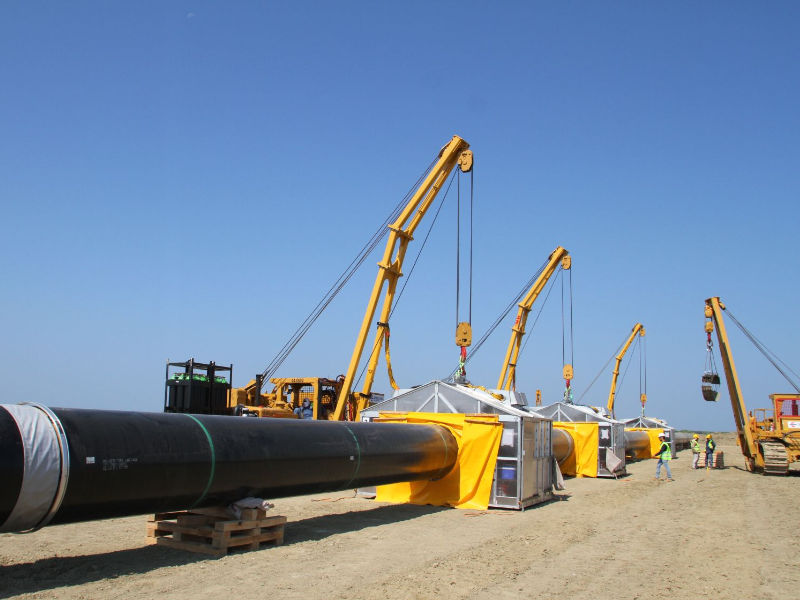
Crucially though, this project also gives rise to a new model, in which telecoms providers collaborate with utilities companies over infrastructure investments. Together, EXA and TAP share an existing route and have created a fibre route along it, developing digital infrastructure that benefits both parties.
The launch of TAE is testament to EXA Infrastructure's commitment to innovation and progress. Its existence highlights the power of collaboration between technology leaders and the broader digital community and this synergistic approach demonstrates that progress is best achieved by working hand-in-hand with partners who share the vision of a more connected, dynamic world.


