



Fortinet drives cybersecurity innovation and the convergence of networking and security. With more than 50 integrated enterprise-grade products, the company says it secures people, devices, and data worldwide. A lot of customers rely on its widely deployed and validated solutions.
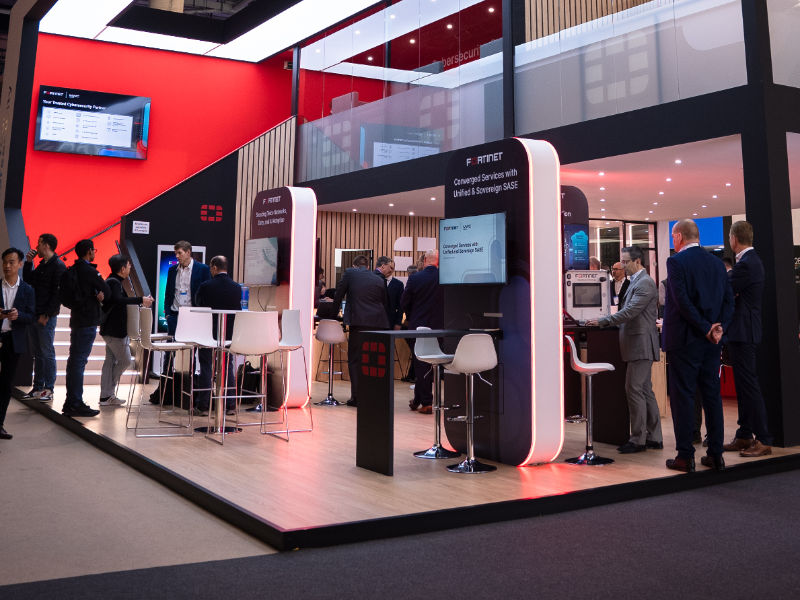
Photo: During MWC, we spoke to Ronen Shpirer – Director of Solutions Marketing for Telco at Fortinet.
On Zero Trust and the ongoing “arms race” with cybercriminals—do you believe the industry can ever truly get ahead?
“Yes, I believe that in many ways, the industry is already ahead of cybercriminals”, says Ronen Shpirer. “While threats continue to evolve, the overall success rate of attacks remains relatively low. The primary vulnerability is not technological, but human—the so-called “human factor.”
And this is the most important challenge that we actively should address. Organizations need to increase investing in tools and programs that raise awareness, educate users, and promote safer behaviour in digital environments.
“Talk about security and IT and the use of AI, put it on the agenda, not once but every week. Create awareness and educate” Ronen Shpirer continues. “That is how you create so called security hygiene. As a result, although cyber risks cannot be entirely eliminated, the combination of advanced security frameworks like Zero Trust and improved user awareness significantly strengthens our defensive position.
So, you don’t think that cybersecurity is ultimately an endless arms race. What structural advantages are beginning to shift toward defenders?
Ronen Shpirer: “I would put it in slightly more nuanced terms. While cybersecurity remains an ongoing arms race, I see advantages shifting toward defenders, especially with the rise of AI. Since AI depends on data and context—and defenders have far greater access to both—they are in a stronger position to apply it effectively and strengthen their security posture.”
Quantum Day
Q-Day refers to the hypothetical moment when quantum computers become powerful enough to break current encryption methods, such as RSA and ECC, which underpin most modern security systems. These cryptographic techniques protect everything from banking transactions to classified government communications, meaning their compromise would have far-reaching consequences for global digital security. Experts anticipate this risk could materialize in the 2030s, with some, including the Dutch AIVD, identifying 2030 as a realistic possibility.
The mathematical problems protecting these systems are nearly impossible for classical computers to solve. However, a sufficiently powerful quantum computer could solve these problems in seconds. This breakthrough would effectively render the world’s current digital defences useless.
How seriously does Fortinet take the threat of “Q-Day”—the moment quantum computing can break today’s encryption standards? Where are we realistically on that timeline?
“Fortinet takes this threat very seriously. Quantum computing is advancing rapidly, with increasing numbers of qubits and significant research focused on improving algorithm efficiency,” says Ronen Shpirer. “These developments signal meaningful progress. That said, Q-Day is unlikely to be a single moment; in my opinion it will more likely be a gradual transition. In response, many enterprises—and particularly telecom operators—are already planning to become quantum-safe within the next five years.
So, it is definitely not a marketing hype to draw extra attention to security?
“No, this is not marketing hype—it represents a real and credible threat. There is substantial investment in quantum-safe technologies such as QKD and PQC, and post-quantum cryptography standards are actively being developed and published. Fortinet already integrates PQC-compliant algorithms into generally available versions of multiple products, enabling customers to start their transition to quantum-safe security today.”
How is Fortinet preparing its telco customers specifically for a post-quantum world?
Ronen Shpirer: “The same applies here; preparation starts with education (!) —ensuring customers understand both the risks and the required steps forward. In parallel, Fortinet is developing and enhancing carrier-grade, quantum-safe solutions. This is already being driven by demand, as some Tier-1 telecom operators require quantum-ready capabilities today. Fortinet supports this with solutions that protect data in motion, including Post-Quantum Cryptography (PQC), Quantum Key Distribution (QKD) and Post-Quantum Pre-Shared Keys (PPK) for VPNs as well as PQC for TLS (Transport layer Security).
What would be the first visible consequences for telecom operators and media companies if quantum decryption became viable tomorrow?
“The most immediate concern is the “harvest now, decrypt later” scenario. Adversaries may already be collecting and storing encrypted data with the intention of decrypting it once quantum capabilities become viable. The first consequences would likely involve the exposure of sensitive information and intelligence. Importantly, it would be very difficult for affected organizations to detect whether their data had been decrypted, making this a particularly challenging risk to manage.”
SASE
Let’s switch over to Sase, where we bring networking and security together. The Fortinet SASE solution enables secure access to the web, cloud, and applications for the hybrid workforce, while simplifying operations. It combines FortiSASE cloud-delivered security service edge (SSE) with SD-WAN to extend the convergence of networking and security from the network edge to remote users.
For a non-technical executive, how would you explain the business case for SASE in one minute?
“That's a challenge,” says Ronen, “but essentially SASE represents a shift away from complex, do-it-yourself integration of multiple vendors and products toward a fully integrated solution, delivered either from the cloud or in a hybrid model depending on the use case. It operates on a subscription basis—per user or per site—offering predictable recurring costs. At the same time, it enables centralized provisioning and management across multiple services, with a modular approach that can scale as needed. Its global delivery model ensures that security is enforced close to the user through distributed points of presence, making it particularly effective for remote workforces and SaaS-driven environments.”
SASE is often presented as a way to reduce complexity. In practical terms, what complexity disappears for customers—and what new complexity might emerge?
Ronen Shpirer: “SASE definitely reduces complexity by limiting vendor sprawl, lowering associated costs and operational effort, and reducing latency. It can also eliminate or significantly reduce MPLS costs, while removing the burden of hardware and software refresh cycles and patching. Additionally, it enables a more consistent security policy and posture across the organization.”
“That said, SASE can reveal areas of improvement that were previously harder to see. Its identity‑centric design quickly brings to light gaps in identity and access management—such as variations in device compliance or disconnected directory services—giving organisations a clear opportunity to strengthen their foundation. It also encourages new ways of working, fostering closer collaboration between network and security teams and supporting a more integrated operational model.
The migration journey itself is a transition phase, where legacy architectures and the new SASE approach coexist, helping organisations modernise at their own pace while building long‑term resilience.”


