



Connectivity is essentially an invisible yet important thread weaving through our daily lives, easily overlooked, and often taken for granted. Behind TV shows we stream, or lifeline calls we make, is a silent force beckoning the inevitable progressed expectance for advanced technologies, and the seamless integration of it with humanity.
As industries automate and accelerate, moving from decades-old traditions to digital transformations, companies are building networks that make it all possible. From ports and warehouses to transport hubs and smart cities, they deliver seamless, high-performance connectivity, ensuring operations run efficiently and effectively where it matters most—while keeping them connected 24/7, without interruption.
Milliseconds Matter: Networks Assembled for Optimal Output
In today’s hyper-connected industrial world, network challenges are not just technical hiccups; they are real business problems, often far more complex than they appear. Kinson Chan, CEO of eSIX, puts it into relatable terms, "Imagine playing a video game at home when your Wi-Fi suddenly cuts out or slows down. You scramble to switch to mobile data, but that split-second lag has already cost you the win."
Now, imagine that same delay in a factory floor, a port terminal, or a mining site. In these high-stakes environments, a momentary loss of connectivity isn’t just frustrating; it spells chaos and potentially dangerous. That is where the Xatellite CPE steps in. Its next-gen router uses advanced network-bonding to merge multiple connections—including 5G, 4G, fixed line, Wi-Fi, and satellite—into one ultra-reliable, low-latency channel for industrial operations. Powered by eSIX’s patented IPfibre technology, it ensures seamless switching and millisecond-level responsiveness. Its plug-and-play design and support for hybrid-network integration offers a cost-effective, high-performance solution built for the demands of modern, digitalised industrial scenarios.
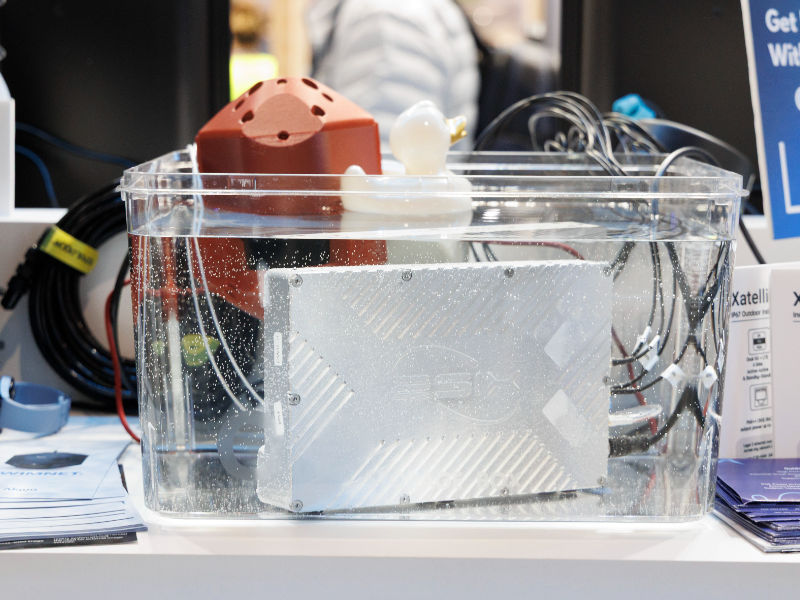
eSIX’s next-gen router, Xatellite CPE, merges multiple connections—including 5G, 4G, fixed line, Wi-Fi, and satellite—into one ultra-reliable, low-latency channel for industrial operations.
The tech company was born in Hong Kong, yet, first rolled out its technology at a major Port in Mainland China. Kinson recalls this first major deployment with reminiscence: "We were at one of the world’s largest ports, and our innovations were not only solving immediate challenges, they were also creating substantial value for businesses." Since its successful debut, eSIX has expanded beyond ports to other industries across APAC and is now targeting the growing demand for smart connectivity in Europe. "Many multinational corporations struggle to integrate networks across regional offices," he says. "Deploying our solution across 15 offices in five countries presents unique challenges, and we work with local telcos to ensure network compatibility."
The ambition for an international stage was echoed by Hong Kong Science and Technology Park (HKSTP) leading delegations to events like the Mobile World Congress (MWC) in Barcelona, where the industry flew in from around the world, brought together their expertise and forge partnerships in both innovation and business areas. "They asked to meet in London right after the event (the MWC)," Kinson adds, noting the attention brought to their solutions.
As technology evolves, eSIX focuses on more than just 5G. "It’s not about 5G, 6G, or 7G," says Kinson. "It’s about the access. Our goal has always been to seamlessly connect all those networks, regardless of the generation."
Long-Distance Relationships: From Navigation to Automation
While next-gen tech for industrial operations is taken care of, another Hong Kong tech venture Altai Technologies is addressing challenges in other critical sectors, such as logistics and ports, that long for robust and reliable connectivity that spells seamless.
When Altai was founded in 2006, the team saw persistent issues with traditional Wi-Fi in industrial settings, such as blind spots, slow speeds, severe interference from neighbourhood networks, and frequent disconnections caused by weak signals. From automated guided vehicles and robots to smart sensors and real-time monitoring systems, everything hinges on stable, always-on networks. Any signal disruptions could mean production downtime, compromised safety, or even complete system failure.
Determination to revolutionise Wi-Fi functionality came Super Wi-Fi, geared with patented smart antenna that analyses all received signal paths, which enhances coverage by utilising multi-path signals to achieve high diversity gain, optimising uplink performance even in non-line-of-sight and high interference-level environments.
"One of our key clients is a major e-commerce firm that relies heavily on warehouse robots," said Ken Leung, President of Altai. "However, standard Wi-Fi often to frequent connection drops as moving boxes between shelves continuously alter signal paths. Imagine a robot losing signals—it can cause huge traffic jams within the facilities then proceed to hold down the entire logistics line." Altai’s given a solution to that. The Super Wi-Fi can automatically tune signal paths in real-time and uses advanced algorithms to identify optimal pathways for robots, ensuring uninterrupted connectivity.
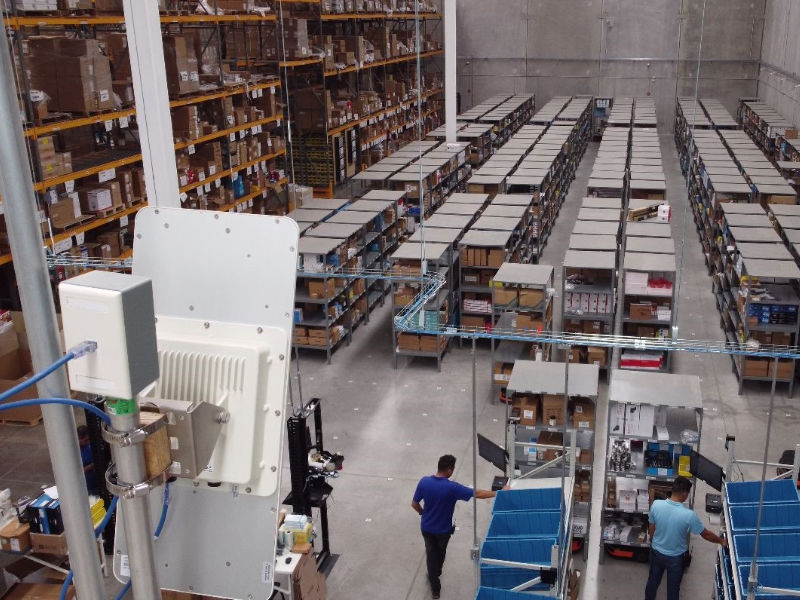
Altai Technologies’ Super Wi-Fi, geared with patented smart antenna, automatically tune signal paths in real-time and uses advanced algorithms to identify optimal pathways for robots, ensuring uninterrupted connectivity.
Altai’s cutting-edge technology has brought them notable success in logistics and port trades, commanding a 70% share of the global market and establishing sales channels in over 100 markets. While Ken takes pride in Altai's homegrown engineering team in Hong Kong, he also attributes the company's growth to HKSTP where essential resources, funding, and international exposure for expansion are within reach.
Now, the true potential of seamless, low-latency networks extends far beyond the factory floor. These Hong Kong-based pioneers are practically saving lives in the real world.
"Technology can be applied in ways we can’t always predict—that’s why we focus on being customer-centric," said Ken. "We co-developed the award-winning HKSOS app in collaboration with the Hong Kong Police Force. This app works in conjunction with our one-of-its-kind Signal Radar solution to detect SOS signals from Wi-Fi-enabled devices up to 1.7 kilometres away, even in areas lacking mobile coverage. We didn’t see the full potential of our tech until someone asked if we could create something like that; this is magical!" By pinpointing missing persons within several hours, the app has contributed to hundreds of successful rescues in Hong Kong.
Similarly, eSIX and another HKSTP company, Alqua, announced a partnership to revolutionise water safety for remote yachts and beaches during the MWC. By combining the 5G OcéanoX CPE connectivity with ultrasonic drowning detection, the system enabling real-time monitoring and rapid alerts, improving emergency response, emerged and made an invaluable addition to the thriving ecosystem.
Connecting with the Future
As automation and AI continue to reshape industries building on connectivity, backbone of today’s digital world, seamless network integration has become vital in accelerating digitalisation, unlocking growth opportunities, and positioning Hong Kong as an international I&T hub and leader in a smarter world as it takes long strides, technologically speaking.
For more information you can visit Hong Kong Science & Technology Parks Corporation (HKSTP).


